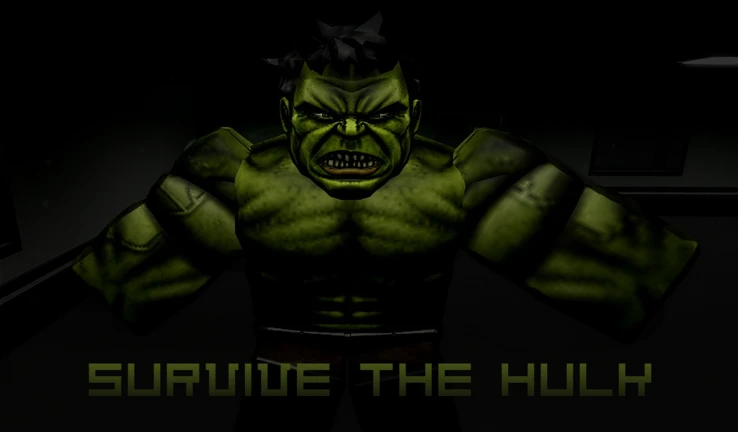
- Survive the Hulk map knowledge is the single biggest factor in surviving each round.
- Interior structures, vents, and windows are transition tools, not permanent hiding spots.
- Destructible cover becomes a trap once the Hulk commits to breaking it down.
- Always plan two escape routes before entering any risky area.
- Coordinate with teammates without clustering so the whole team is not caught together.
Survive the Hulk Map Overview: Why Movement Options Matter
The Survive the Hulk map is built around a simple pressure loop: the Hulk destroys walls, doors, windows, and furniture while hunting Survivors, and Survivors explore the facility, move through vents, break glass, and cooperate to escape. Because almost everything on the map can be broken, static hiding rarely works for long. Your survival odds depend on how many movement options you can keep open, not on how well you can stay still.
A useful way to read the map is by exit density: how many ways you can leave a structure if the Hulk arrives. Rooms with one entrance, dead-end corridors, and areas surrounded by destructible walls all reduce your options over time. Connected interiors with multiple openings, vent transitions, and window routes keep your options alive.
Video Highlights:
- See the full facility layout and chase flow in live gameplay
- Watch how walls, doors, and glass break under Hulk attacks
- Observe real escape routes through vents and windows
The table below breaks down the core map feature types and how each one affects survival:
| Map Feature | Survival Value | Main Risk | Best Use |
|---|---|---|---|
| Connected interiors | ★★★★★ | Predictable if reused | Breaking line of sight between rooms |
| Vents | ★★★★ | Checked once discovered | One-time direction change |
| Windows | ★★★★ | Broken by the Hulk over time | Quick exits from upper floors or rooms |
| Destructible buildings | ★★★ | Removed permanently once smashed | Temporary cover only |
| Open ground | ★★ | No cover from sprint chases | Emergency spacing between structures |
| Dead-end rooms | ★ | Fatal if cornered | Avoid entirely |
Never enter a room or corridor with only one exit unless you can see the Hulk is committed elsewhere. Single-entrance interiors are where most first-round eliminations happen.
How to Read the Map in Your First 30 Seconds
Your opening moments decide your first chase. Instead of running randomly, spend the first seconds building a mental route map: identify the nearest vent, the nearest window, and at least one structure with multiple exits. Once the chase begins, you want to already know where you are going before the Hulk knows where you are.
Scan nearby structures
Look for buildings with more than one entrance and rooms that connect to each other rather than isolated closets.
Mark vent and window locations
Note the closest vent and window from your starting position. These are your direction-change tools, not hiding spots.
Identify the destructible zones
Note which walls and covers look breakable. Treat anything the Hulk can smash as temporary, and plan a backup route that does not rely on it.
Build a primary and backup loop
Choose a primary route through connected interiors and a backup route through a different structure so the Hulk cannot cut both at once.
Change direction around corners instead of running in straight lines. Distance only helps when the Hulk cannot see your next move.
Interior Hiding Areas: Use, Then Leave
Interior hiding areas are the strongest general-purpose survival zones on the map, but only when used dynamically. Enter through one opening, move between connected rooms, and leave through a different route. The moment the Hulk begins destroying the structure or controlling its entrance, your hiding spot has become a cage.
Connected Rooms
- Multiple exits keep you unpredictable
- Move between rooms instead of freezing in place
- Best early-round hiding option
Vent Transitions
- Break pursuit and change direction fast
- Plan your next destination before entering
- Never reuse a vent the Hulk has already seen
Window Routes
- Fast exits from enclosed rooms
- Break glass early if it slows you down
- Watch for the Hulk breaking windows behind you
The survival priority of each hiding approach, ranked:
| Approach | Priority | When to Use | When to Abandon |
|---|---|---|---|
| Connected multi-exit interiors | High | Early round, before the Hulk commits | Structure starts getting destroyed |
| Vent transition | High | Mid-chase to break pursuit | Vent already checked this round |
| Window exit | High | Cornered in a room | Window blocked or broken by the Hulk |
| Single-room hiding | Low | Brief pause when the Hulk is far | Immediately when he turns toward you |
| Destructible cover | Situational | Short-term vision break | Once the Hulk targets the structure |
Share warnings and directions with teammates, but stay spread out. A clustered group gives the Hulk one chase that eliminates everyone; a spread team forces multiple chases and wastes his time.
How the Hulk Changes the Map Each Round
Understanding the map also means understanding how it shrinks. The Hulk can break walls, doors, windows, and furniture, which permanently removes cover and closes off routes as the round progresses. A corridor that was safe at the start may be a collapsed dead end by the final chase.
The Hulk's toolkit shapes which areas stay viable:
| Hulk Capability | Effect on the Map | Survivor Counter |
|---|---|---|
| Powerful smash attacks | Destroys walls and furniture cover | Do not rely on any single cover object |
| Sprint pressure | Punishes open-ground running | Stay near structures and corners |
| Lightning-style abilities | Threatens clustered targets | Keep spacing between teammates |
| Hidden-player detection tools | Checks common hiding areas | Rotate spots instead of camping one |
| Structural destruction | Closes routes over time | Track which exits are already gone |
Endgame is where map knowledge matters most. When few Survivors remain, the Hulk stops covering the whole map and focuses on the last safe structures. At that point, rotating toward open space or another connected building is usually safer than hiding deeper in the structure he is demolishing.
Do not hide in the last intact building on the map. It is the first place an experienced Hulk checks, and destructible cover there disappears fast.
Escape Route Planning Checklist
Run through this checklist mentally each round before the first chase begins. Players who complete all five items consistently survive longer than players who rely on reaction speed alone.
Pre-Chase Map Checklist:
- Identify two escape routes from your starting area
- Locate the nearest vent and window before moving
- Confirm your hiding area has a secondary exit
- Note which nearby cover looks destructible
- Agree on a warning signal with teammates without clustering
The most common late-round mistake is burning every route early. Keep one familiar safe path in reserve for the final chase when the Hulk is already close.
FAQ
Q: What is the best area on the Survive the Hulk map for new players?
Connected interior structures with multiple exits are the safest general areas. They let you break line of sight between rooms and leave through a different route, which is more forgiving than open ground or single-entrance rooms.
Q: Can the Hulk destroy vents and windows too?
The Hulk can break walls, doors, windows, and furniture. Treat every environmental route as temporary: if the Hulk has seen you use a vent or window, he can check it or remove surrounding cover, so do not reuse the same opening.
Q: How many players share a map in each round?
Servers hold up to 12 players in a 1-vs-all survival format, so one player controls the Hulk while the rest play as Survivors trying to outlast or escape the round.
Q: Is Survive the Hulk available on all platforms for map practice?
Yes. The game supports PC, mobile, Xbox, and PlayStation, so you can learn the map layout on any platform. Movement and interaction inputs vary slightly, so check the on-screen prompts for your device.
This guide reflects the current Survive the Hulk experience described on the official Roblox game page. Map details and destruction systems can change with updates, so recheck your routes after each patch.